The most dangerous type of underperforming revenue cycle management services is not the one that fails visibly. It is the one that appears to be working while quietly allowing revenue to slip away.
Claims are submitted. Payments arrive. Denials are processed. Reports are generated. On the surface, everything seems to be running smoothly. But what those reports often fail to show is whether your revenue cycle is capturing every dollar it should, preventing avoidable denials, identifying underpayments, and tracking the right performance metrics.
Most practices are not looking in the right places. It is not because they do not care about financial performance. It is because the reports provided by their revenue cycle management services usually highlight what has happened, not what is being missed.
Looking Functional vs. Actually Delivering Results
A revenue cycle that looks functional focuses on activity. Claims are submitted on time, payments are posted promptly, denials are worked, and monthly reports confirm that the process is moving.
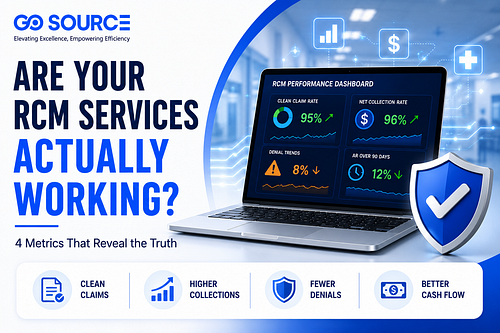
A revenue cycle that is actually working focuses on outcomes. It maintains a clean claim rate above 95%, reduces denial rates over time through prevention, maximizes net collection rates, and keeps accounts receivable (AR) over 90 days under control through proactive follow-up.
The difference between activity and results is not obvious in a standard billing report. It becomes clear only when outcome-focused metrics are tracked consistently.
Four Questions to Measure RCM Performance
Instead of waiting for revenue problems to appear, ask these four questions to evaluate your current RCM services.
1. What is your current clean claim rate, and how has it changed over the last three months?
A clean claim rate above 95% shows that front-end processes are preventing errors before submission. A rate below 90% usually points to workflow issues that create unnecessary rework.
2. What are the top three denial reasons this month, and what has been done to prevent them?
This reveals whether denial management is preventive or simply reactive. If the same denial reasons continue month after month, the underlying problems are not being fixed.
3. What percentage of AR is over 90 days, and which payers are responsible?
AR aging beyond 90 days represents revenue at the highest risk. When it exceeds 15%, delayed follow-up may be putting collections in jeopardy.
4. What is your net collection rate for the last quarter?
Net collection rate is one of the clearest indicators of revenue cycle performance. A rate below 95% often signals revenue leakage that routine activity reports cannot detect.
What to Do If You Find Gaps
If these questions reveal low clean claim rates, recurring denials, high AR aging, or weak net collection rates, the problem is fixable. However, it requires an RCM partner that addresses root causes instead of simply processing billing tasks.
That means improving front-end workflows, preventing recurring denial patterns, verifying payments against contracted rates, and actively following up on aging claims before they become unrecoverable.
How GoSource Helps Practices Improve RCM Performance
GoSourceMD is a HIPAA and SOC 2 Type 2 certified revenue cycle management company supporting U.S. practices across OB/GYN, cardiology, urgent care, gastroenterology, and mental health.
We provide regular reporting on the metrics that matter most, including clean claim rates, denial trends, AR aging, and net collection rates. When performance falls short, we identify the root cause, implement preventive solutions, flag underpayments, and strengthen workflows that protect long-term revenue.
Visit gosourcemd.com to learn how revenue cycle management services should perform for your practice.
Find Out If Your RCM Services Are Really Working
If you cannot answer these four questions with confidence, you may not have a clear picture of your revenue cycle’s performance. That uncertainty could be costing your practice revenue without you realizing it.
Visit gosourcemd.com to speak with our team and receive a practical assessment of your revenue cycle performance.